What Is a Multi Point Locking System?
A multi point locking system can solve a common door problem: one central lock may not hold the whole door leaf evenly against the frame. When buyers ignore this, they may face poor sealing, difficult operation, or after-sales complaints. The better solution is to evaluate the lock, door, frame, and accessories as one coordinated system.
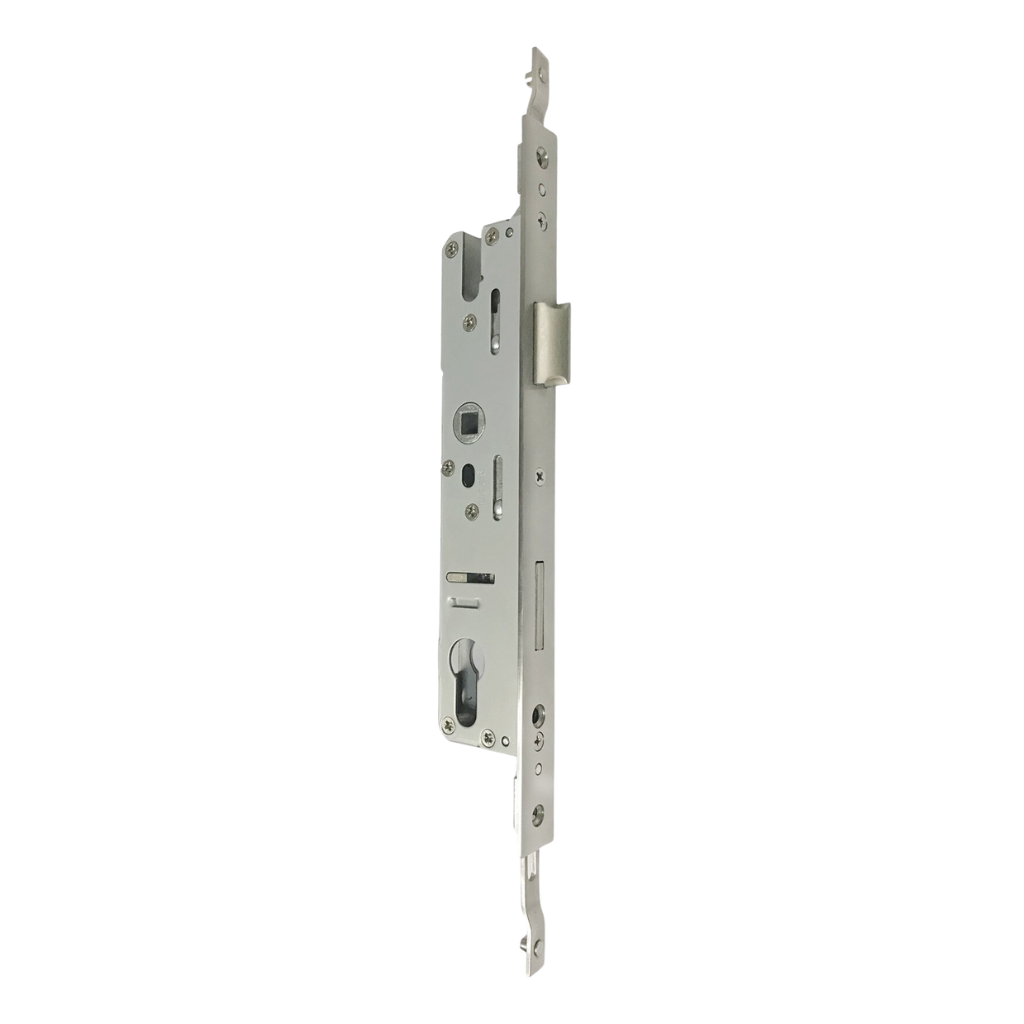
A multi point locking system is a door or window locking mechanism that secures the leaf at several positions, usually three or more, through one operation of the handle or key.1 It may use deadbolts, hooks, rollers, or shoot bolts to engage with frame keepers, improving locking support, sealing, and load distribution.2
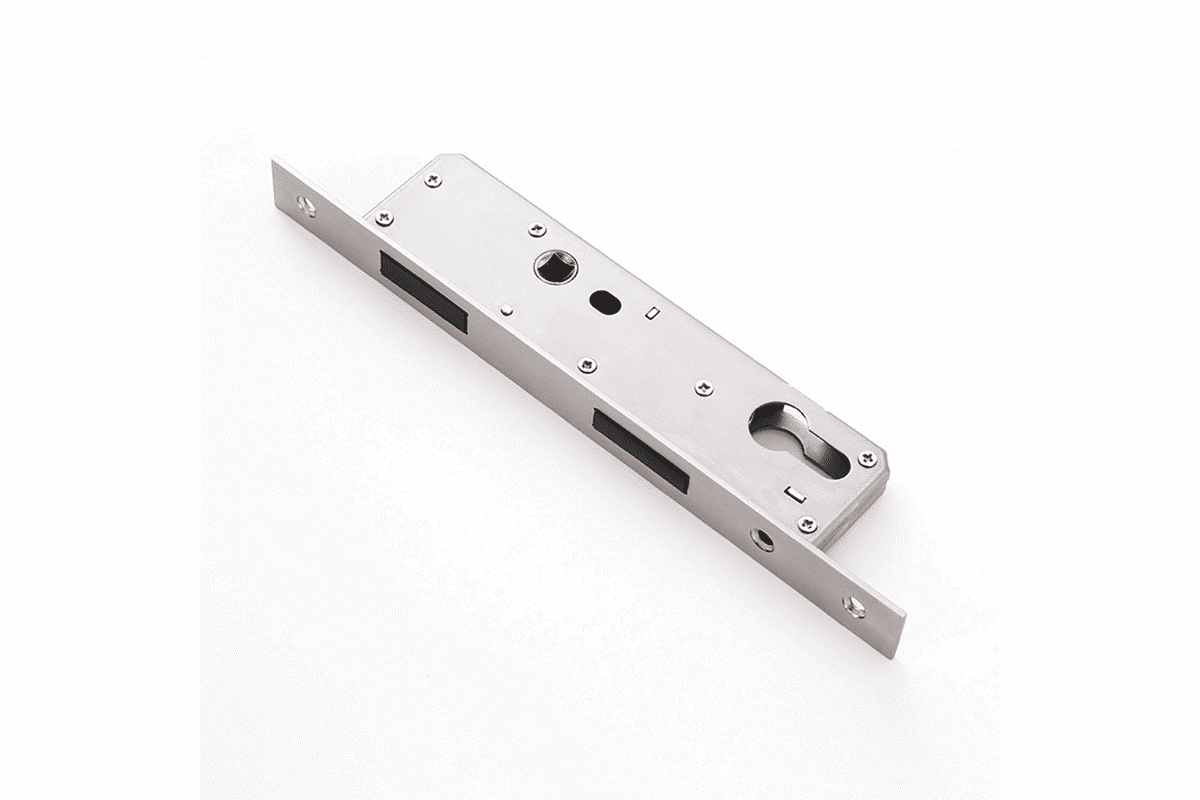
In my experience with architectural door hardware production and supplier communication, the biggest mistake is treating this product as just “a stronger lock.” It is more accurate to see it as a matched hardware configuration. The lock body, rods, hooks, cylinder, handle, keepers, and door profile must all work together.
How Does a Multi Point Locking System Work?
Many buyers first notice a multi point locking system because the door feels firmer when closed. However, if the internal transmission is poorly matched, that firm closing feeling can quickly become hard handle movement, misalignment, or failed engagement. I always start by explaining the working principle before discussing price or specifications.
A multi point locking system works by using one operation to drive several locking points at the same time. When the user lifts the handle, turns the key, or operates the lock, internal transmission parts move bolts, hooks, rollers, or shoot bolts into keepers installed on the frame.
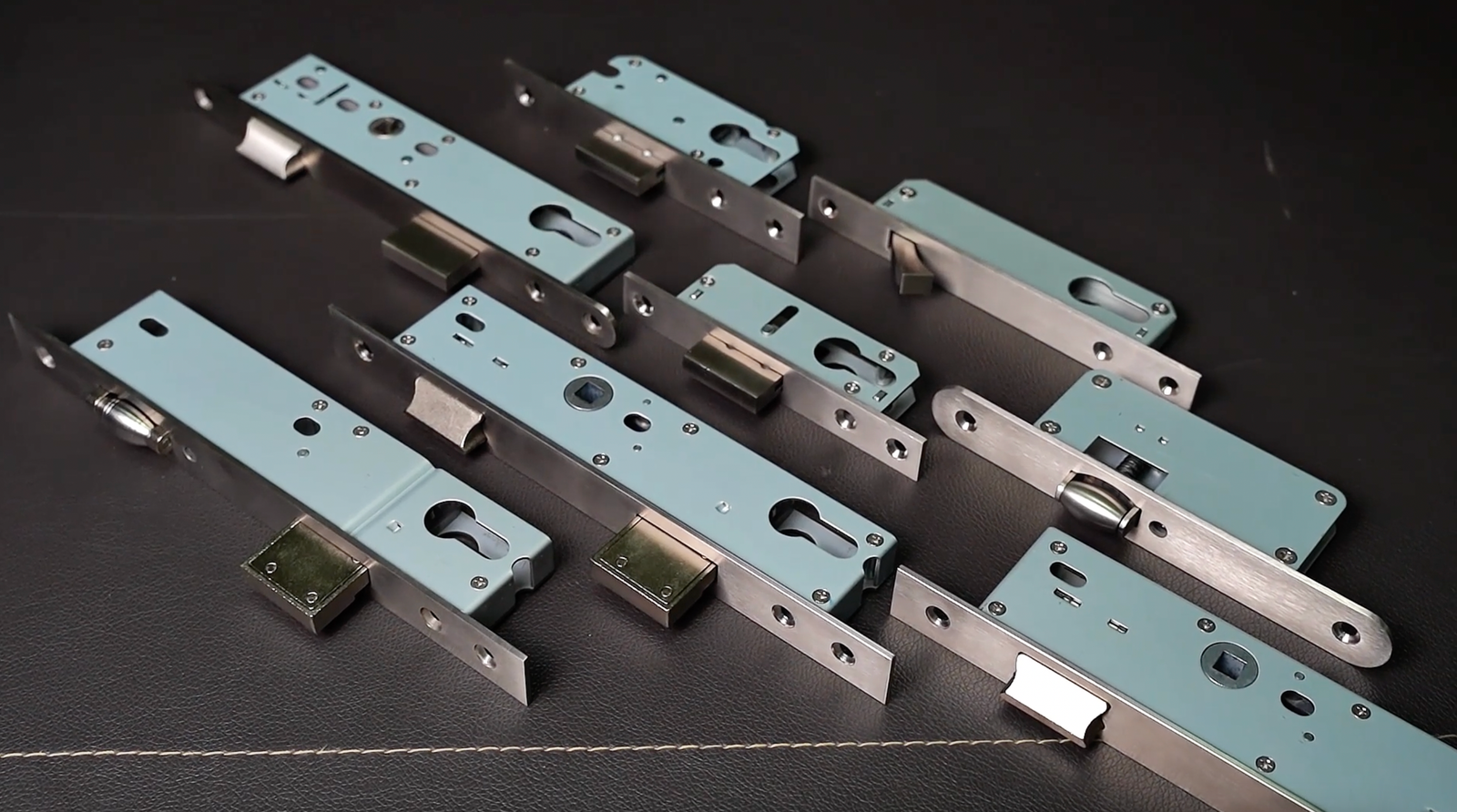
The basic movement is simple, but the matching is not
The core idea is coordinated movement. One central lock body connects with upper and lower transmission parts. These parts drive locking elements placed along the door edge. The locking points then engage with matching keepers or strike plates fixed on the frame.
In a common configuration, the system may include:
- Central lock body for the main latch and deadbolt function
- Upper and lower rods to transfer movement along the door height
- Hooks, rollers, mushrooms, bolts, or cams as locking points
- Shoot bolts that lock into the top and bottom frame in some designs
- Euro profile cylinder for key operation
- Lever handle or pull handle set depending on the door type
- Frame keepers or strike plates that receive each locking point
From a manufacturing and inspection view, I pay close attention to how these parts interact. A locking system may look correct in drawings, but small dimensional errors can make the handle feel heavy. For example, if the keeper position is off by only a few millimeters, the hook may rub against the frame instead of entering smoothly.3
Common locking point types
Different markets and door systems use different locking point designs. I usually compare them like this:
| Locking point type | Common function | Typical use case | Buyer evaluation point |
|---|---|---|---|
| Deadbolt | Central security locking | Entry doors, exterior doors | Check bolt throw and keeper strength |
| Hook bolt | Pulls door toward frame | PVC, aluminum, timber doors | Check hook engagement depth |
| Roller cam | Helps compression and sealing | Doors needing better gasket pressure | Check adjustability |
| Mushroom cam | Resists pull-out in some profiles | Window and door systems | Check profile compatibility |
| Shoot bolt | Locks top and/or bottom | Tall doors, patio doors | Check floor/head keeper alignment |
More locking points do not automatically mean better performance.4 The quality of the linkage, the stiffness of the door leaf, the keeper design, and the installation accuracy matter just as much. I have seen buyers request “five points” when a well-matched three-point configuration would operate more smoothly for their door profile.
Handle operation and key operation
A multi point lock can be designed with different operating methods. Some systems require the user to lift the handle before turning the key. Other systems automatically engage when the door closes. Some commercial configurations use panic or emergency exit hardware, but those require careful verification against applicable standards.5
For B2B buyers, I suggest confirming these questions early:
- Does the handle lift to engage the locking points?
- Does the key throw the central deadbolt only, or all points?
- Does the system need automatic locking?
- Will the door use a lever handle, pull handle, or special trim?
- Are there local code or certification requirements?
At SDH Hardware, when we discuss multi point locking configurations with door manufacturers, we usually ask for door section drawings before recommending a mechanism. The door profile determines the available backset, faceplate size, rod space, keeper position, and handle height. Without those details, the discussion stays too general.
Where Is a Multi Point Locking System Used?
A multi point locking system is attractive for many projects, but it is not suitable for every door by default. If buyers select it only because it sounds more secure, they may overlook door weight, frame design, climate conditions, user habits, and installation tolerance. I prefer to match the application first.
A multi point locking system is commonly used on exterior entrance doors, patio doors, balcony doors, residential front doors, and selected commercial doors that need stronger frame engagement or better sealing. It is especially useful when the door leaf is tall, exposed to weather, or required to close tightly and evenly.
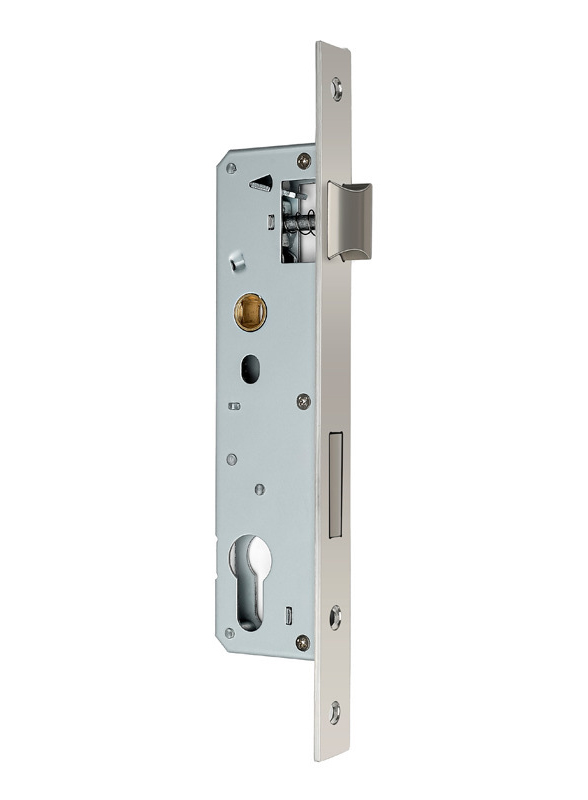
Exterior doors are the most common application
Exterior doors often need more than basic locking. They must resist wind pressure, help maintain indoor comfort, and keep the door leaf pulled against the gasket. A single central latch may close the door, but it does not always compress the upper and lower areas evenly.
A multi point configuration can help by distributing the locking force across the door height. This can be valuable for:
- Residential entrance doors
- Villa and apartment front doors
- Patio and terrace doors
- Balcony doors
- Aluminum, steel, timber, and composite doors
- PVC door systems in colder markets
In colder climates, sealing performance becomes a major purchasing concern. Buyers often ask about thermal insulation, but the hardware also affects how tightly the door closes. If the locking points pull the door leaf evenly into the gasket, the whole door system may perform better.6 However, this depends on the gasket design, frame rigidity, hinge adjustment, and installation quality.
Door type changes the locking design
I do not recommend selecting a multi point lock from a catalog image alone. The correct choice depends on the door construction.
| Door type | Common concern | Multi point lock consideration |
|---|---|---|
| Timber door | Natural movement, thickness variation | Check faceplate fixing and keeper adjustability |
| Steel door | High rigidity, security expectation | Check lock case size and bolt engagement |
| Aluminum profile door | Narrow profile space | Check backset, faceplate, and profile groove |
| PVC door | Compression and sealing | Check roller or mushroom cam adjustment |
| Patio door | Long leaf and weather exposure | Check upper/lower locking distribution |
For example, an aluminum profile door may have limited internal space. The lock case cannot simply be enlarged without affecting the profile. A timber entrance door may offer more space, but the wood can move slightly with humidity.7 In that case, adjustable keepers may reduce service problems.
Commercial use requires extra verification
Commercial buyers sometimes ask whether these systems are suitable for fire doors, escape doors, hotel doors, or high-traffic public buildings. I always answer carefully. A multi point lock is a mechanism type, not an automatic approval for every regulated application.8
For regulated projects, buyers should verify:
- Relevant test standards
- CE documentation when applicable
- Fire-rated certificates if the door is fire-rated
- Emergency exit or panic function requirements
- Compatibility with the certified door assembly
- Local building code requirements
At SDH Hardware, our core products can be supplied with authoritative CE and fire-rated certification where applicable, but I always advise buyers to verify the exact certificate, product model, and intended door application. Certification is not just a logo. It is a document tied to specific tests, configurations, and use conditions.9
How Does a Multi Point Locking System Compare With a Single Point Lock?
Many buyers compare a multi point locking system with a single point lock only by asking, “Which one is safer?” That question is too narrow. If the door does not need multi-point engagement, a simpler lock may be easier to install and maintain. If the door needs better sealing or support, one central lock may not be enough.
A multi point locking system locks the door at several positions, while a single point lock mainly secures the door at one central location. Multi point locking can improve frame engagement, sealing pressure, and load distribution, but it requires better matching between the lock, door leaf, frame keepers, and installation process.

The real difference is door control
A single point lock secures the door near the handle height. This can be sufficient for many interior doors, light-duty doors, and projects where sealing is not a major concern. It is also simpler, usually lower cost, and easier for installers to understand.
A multi point lock controls more areas of the door edge. This can help the upper, middle, and lower areas close more evenly against the frame. That is why many exterior door systems use it as part of the complete door performance strategy.
Here is a practical comparison:
| Factor | Single point lock | Multi point lock |
|---|---|---|
| Locking locations | One main point | Usually three or more points |
| Installation complexity | Lower | Higher |
| Sealing support | Limited to central area | Better distributed pressure |
| Door leaf support | Centralized | Spread along door height |
| Hardware cost | Usually lower | Usually higher |
| Maintenance sensitivity | Lower | Depends on alignment |
| Best fit | Interior or basic doors | Exterior, patio, or higher-performance doors |
Security is only one part of the discussion
It is reasonable to say that multi-point engagement can improve forced-entry resistance in many door systems.10 However, I avoid claiming that every multi point system is automatically “high security.” Security depends on many parts:
- Door material and structure
- Frame strength
- Keeper fixing method
- Cylinder quality
- Handle protection
- Hinge security
- Installation screws and reinforcement
- Tested security classification, where applicable
A weak frame can reduce the benefit of strong locking points. A poor cylinder can become the attack point even when the side of the door has several hooks. This is why I encourage buyers to evaluate the full assembly.
A lock is only as reliable as the door, frame, keeps, cylinder, hinges, and installation around it.
When a single point lock may be enough
A multi point solution is not always necessary. Buyers may choose a single point mortise lock for:
- Interior timber doors
- Office room doors
- Light commercial doors without high sealing demand
- Projects with tight budget and simple installation needs
- Doors where local specifications already define the lock type
I once discussed a project where the buyer wanted multi point locks for all interior apartment doors. After reviewing the use scenario, we found that only the entrance doors needed the extra sealing and locking support. The interior doors could use standard mortise locks. This reduced cost and simplified installation without weakening the intended door function.
When multi point locking makes more sense
A multi point mechanism becomes more valuable when the door is:
- Tall or wide
- Installed outdoors
- Exposed to wind, rain, or temperature change
- Designed with compression gaskets
- Expected to provide better perimeter sealing
- Used in a market where buyers expect multi-point hardware
- Part of a premium entrance or patio door system
The key is not to maximize the number of points. The key is to select the right layout. A well-matched three-point lock can be better than a poorly designed five-point lock that creates friction, difficult locking, or frequent adjustments.
How Should Buyers Choose a Multi Point Locking System Supplier?
Choosing a multi point locking system supplier can be difficult because many samples look similar from the outside. The problem appears later, when the lock feels rough, the keepers do not match the frame, or production batches vary. I recommend buyers evaluate both the product and the factory process.
Buyers should choose a multi point locking system supplier by checking technical matching ability, production consistency, testing process, customization support, certificate documentation, and after-sales communication. The supplier should understand the relationship between lock body, transmission parts, handle, cylinder, locking points, keepers, door profile, and installation tolerance.
Start with door data, not only lock data
A professional supplier should ask questions before recommending a configuration. If a supplier offers a model without asking about the door, I become cautious. Multi point locks depend heavily on dimensional matching.
Before confirming a configuration, buyers should prepare:
- Door type: timber, steel, aluminum, PVC, composite
- Door leaf height and width
- Door thickness or profile depth
- Backset requirement
- Faceplate width and shape
- Handle height
- Opening direction
- Frame section drawing
- Keeper fixing position
- Cylinder type and length
- Target market standards
- Required certificates or test reports
At SDH Hardware, we often review drawings and sample requirements before mass production discussion. This helps reduce the risk of wrong backset, wrong faceplate, wrong keeper, or mismatched accessory packaging.
Quality control points buyers should inspect
A multi point lock has more moving parts than a basic mortise lock. That means production consistency matters. Buyers should not judge quality only by surface finish. They should also check movement, tolerance, material thickness, spring performance, and engagement stability.
Important inspection points include:
| Inspection item | What buyers should check | Why it matters |
|---|---|---|
| Handle operation force | Smooth lifting and return | Prevents user complaints |
| Bolt and hook movement | Full travel without sticking | Ensures proper engagement |
| Faceplate straightness | No bending or twisting | Helps installation accuracy |
| Keeper matching | Correct position and clearance | Reduces site adjustment |
| Surface treatment | Consistent finish and corrosion resistance | Supports market expectations |
| Cylinder compatibility | Correct Euro profile and length | Prevents assembly issues |
| Packaging accuracy | Correct accessories included | Avoids missing parts on site |
For large B2B orders, I suggest sample testing before batch confirmation. Door factories can install the lock on an actual door sample and cycle it repeatedly. This reveals problems that drawings cannot show. For example, a hook may work perfectly in hand testing but rub against the gasket pressure after the door is assembled.
Supplier capability matters for OEM and ODM projects
Many door factories and hardware brands need more than a standard lock. They may need a custom faceplate, logo stamping, special surface treatment, custom packaging, or a configuration matched to a regional door system.
A capable supplier should support:
- ODM and OEM development
- Custom product specifications
- Surface treatment options
- Accessory configuration adjustment
- Customer logo stamping or laser marking
- Custom color packaging
- Detailed product drawings after order confirmation
- Finished product inspection before shipment
SDH Hardware operates as a factory-direct architectural hardware manufacturer in China, with production experience in locks, handles, hinges, cylinders, and door accessories. From my position, this matters because multi point locking hardware rarely stands alone. Buyers often need a full door hardware package, including lever handles, Euro cylinders, butt hinges, concealed hinges, and matching accessories.
Certificate verification should be specific
Buyers should verify certifications carefully. A general claim is not enough. The document should match the actual product model, test standard, and intended application.
I recommend asking for:
- Certificate copy
- Test report, if available
- Product model reference
- Scope of application
- Validity or issuing body details
- Any installation limitations
This is especially important for fire-rated doors, public buildings, or regulated commercial projects. A multi point locking system may be part of a tested assembly, but buyers should not assume compatibility without professional review.
Frequently Asked Questions
Is a multi point locking system more secure than a normal lock?
A multi point locking system can improve forced-entry resistance by locking the door at several positions. However, total security also depends on the door leaf, frame, cylinder, hinges, keepers, screws, and tested classification. I recommend evaluating the complete door assembly, not only the lock.
How many locking points does a multi point lock need?
Many systems use three locking points, but some use five or more. More points are not always better. The best choice depends on door height, frame design, gasket pressure, profile space, and user operation. A smooth, well-matched configuration is better than an overloaded one.
Can a multi point locking system improve door sealing?
Yes, it can help improve sealing by pulling the door leaf against the frame at several positions. This may support better air tightness and thermal performance.11 However, the final result also depends on gasket quality, hinge adjustment, door straightness, and installation accuracy.
Is a multi point lock suitable for fire-rated doors?
It may be suitable only if the specific lock model and door assembly have the required fire-rated documentation. Buyers should verify certificates, test reports, and local regulations before using any lock on a fire-rated door. I do not recommend assuming suitability without confirmation.
What information should I provide before ordering?
You should provide door type, leaf dimensions, profile or thickness details, frame drawings, opening direction, handle height, backset, target market, required standards, and preferred locking points. This information helps the supplier recommend a configuration that fits and operates correctly.
Conclusion
A multi point locking system is a coordinated locking and sealing mechanism, not just a stronger version of a standard lock. It uses linked components to secure the door at several positions and can support better frame engagement, sealing, and load distribution when properly matched. For B2B buyers, the best decision depends on door type, frame structure, hardware configuration, and market requirements. If you are evaluating a project, send us your door type, door leaf or profile dimensions, opening direction, target market, and required standards so we can help confirm a suitable configuration.
"Three-point locking - Wikipedia", https://en.wikipedia.org/wiki/Three-point_locking. A building-hardware standard such as EN 15685 defines multipoint locks in relation to linked locking points and associated locking plates, supporting the article’s definition of a single operation securing multiple positions. Evidence role: definition; source type: institution. Supports: A building-hardware standard or neutral reference should define multipoint locks as mechanisms using linked locking points operated from one control point.. ↩
"What Type of Door Lock Is Most Secure? - SDH hardware", https://sdhhardware.com/2026/08/04/what-type-of-door-lock-is-most-secure/. Building-envelope research and multipoint-lock test standards support the mechanism that distributed locking points can increase perimeter compression and share load along the door edge; this is contextual support and does not verify the performance of any specific lock model. Evidence role: mechanism; source type: research. Supports: A neutral technical source should explain that multiple engagement points can distribute closing forces and improve perimeter compression compared with a single central latch.. Scope note: The support is mechanical and contextual; actual improvement depends on the complete door assembly and installation. ↩
"Multipoint Lock Problems: How Better Manufacturing Prevents ...", https://toptekaccess.com/multipoint-lock-problems-how-better-manufacturing-prevents-failure/. Multipoint-lock testing and installation guidance link correct locking-plate alignment with proper engagement and acceptable operating force, supporting the claim that small keeper-position errors can impair smooth operation. Evidence role: mechanism; source type: institution. Supports: A standard or technical guide should support that keeper or strike alignment affects engagement and operating force in multipoint locking systems.. Scope note: The cited source may support the alignment mechanism without specifying the exact “few millimeters” threshold for every profile. ↩
"What Type of Door Lock Is Most Secure? - SDH hardware", https://sdhhardware.com/2026/08/04/what-type-of-door-lock-is-most-secure/. Multipoint-lock standards evaluate characteristics such as operating force, durability, engagement, and locking-plate performance, supporting the view that the number of locking points alone is not a sufficient performance measure. Evidence role: expert_consensus; source type: institution. Supports: A technical standard should show that multipoint lock performance is assessed through functional tests and requirements rather than merely the number of locking points.. Scope note: The source would not prove that a three-point lock is generally superior to a five-point lock; it only supports the broader evaluation principle. ↩
"Understanding Code Requirements for Panic Hardware", https://us.allegion.com/content/dam/allegion-us-2/web-files/allegion/information-documents/Understanding_Code_Requirements_for_Panic_Hardware_110963.pdf. Life-safety codes and panic-exit-device standards, including NFPA 101, the International Building Code, and EN 1125, establish requirements for doors used in emergency egress, supporting the need to verify commercial configurations against applicable standards. Evidence role: expert_consensus; source type: institution. Supports: Codes and standards should show that panic and emergency exit devices are subject to specific requirements for egress doors.. Scope note: The relevant standard varies by jurisdiction and door application. ↩
"2019 Envelope Air Sealing", https://www.energy.ca.gov/sites/default/files/2020-06/2020-CEC-Air_Sealing_Fact_Sheet_F_ADA.pdf. Building-envelope studies on door and window air leakage show that perimeter gasket compression is a key factor in airtightness, supporting the mechanism by which evenly distributed locking pressure may improve door-system performance. Evidence role: mechanism; source type: paper. Supports: A building-envelope study should support that gasket compression and perimeter sealing affect air leakage and door performance.. Scope note: The evidence is contextual because overall performance also depends on gasket design, frame rigidity, hinges, and installation quality. ↩
"Dimensional Changes in Wood", https://extension.okstate.edu/fact-sheets/dimensional-changes-in-wood. Wood-science references, such as university extension materials and the USDA Wood Handbook, explain that wood dimensions change with moisture content and relative humidity, supporting the statement that timber doors may move slightly under changing humidity. Evidence role: mechanism; source type: education. Supports: A university or forest-products source should explain that wood swells and shrinks with changes in moisture content caused by humidity.. ↩
"Top 10 Fire Rated Door Hardware Manufacturers for 2026", https://sdhhardware.com/2026/08/11/top-10-fire-rated-door-hardware-manufacturers-for-2026/. Fire-door and egress regulations treat hardware as part of an approved or listed door assembly, supporting the statement that a multipoint lock mechanism alone does not constitute approval for regulated applications. Evidence role: general_support; source type: government. Supports: A code or government guidance source should show that regulated door applications depend on approved hardware and tested door assemblies, not mechanism type alone.. Scope note: Specific approval requirements differ by jurisdiction, door rating, and intended use. ↩
"General Use Products: Certification and Testing | CPSC.gov", https://www.cpsc.gov/Business--Manufacturing/Testing-Certification/General-Use-Products-Certification-and-Testing. Government guidance on CE marking and construction-product declarations of performance explains that conformity documentation identifies the product, applicable standards, declared performance, and intended use, supporting the statement that certification is tied to specific tests and configurations. Evidence role: definition; source type: government. Supports: A CE-marking or conformity-assessment source should show that certification and declarations identify products, standards, performance characteristics, and intended uses.. Scope note: The details vary by certification scheme and jurisdiction. ↩
"PAS 24 Compliant Door Hardware and Its Importance", https://uaplimited.com/pas-24-compliant-door-hardware-importance/. Security standards for doorsets, such as PAS 24 and forced-entry test methods, assess resistance at the level of the complete doorset and commonly include lock engagement as part of attack resistance, supporting the contextual claim that multipoint engagement can improve forced-entry resistance. Evidence role: expert_consensus; source type: institution. Supports: A security standard or independent testing framework should show that door forced-entry resistance can involve multipoint locking or multiple engagement positions.. Scope note: The standard would not prove that every multipoint lock is high security; performance depends on tested classification and the complete door assembly. ↩
"Air Sealing Improves Energy Efficiency and Air Quality", https://nepis.epa.gov/Exe/ZyPURL.cgi?Dockey=P100V2BM.TXT. Building-science research shows that air leakage through exterior openings affects airtightness and energy performance, supporting the claim that improved door sealing may contribute to better thermal performance. Evidence role: mechanism; source type: research. Supports: A building-science source should support that reducing air leakage at doors and improving perimeter sealing can affect airtightness and thermal performance.. Scope note: The source would support the building-physics relationship, not quantify the improvement from a particular multipoint locking system. ↩