
Types of Door Handles and Where to Use Them?
Types of door handles can look like a simple style choice, but I often see buyers lose time when the handle does not match the door, lock body, frame, or market requirement. A wrong selection can cause installation problems, warranty claims, or poor user feedback. I use a material-and-application method to choose more safely.
The main types of door handles include lever handles, pull handles, narrow-profile handles, knob handles, and specialty handles such as nylon handles for public spaces. I recommend matching each type to the door material, usage frequency, installation width, lock compatibility, fire or hygiene requirements, finish expectation, and target budget before confirming a supplier.
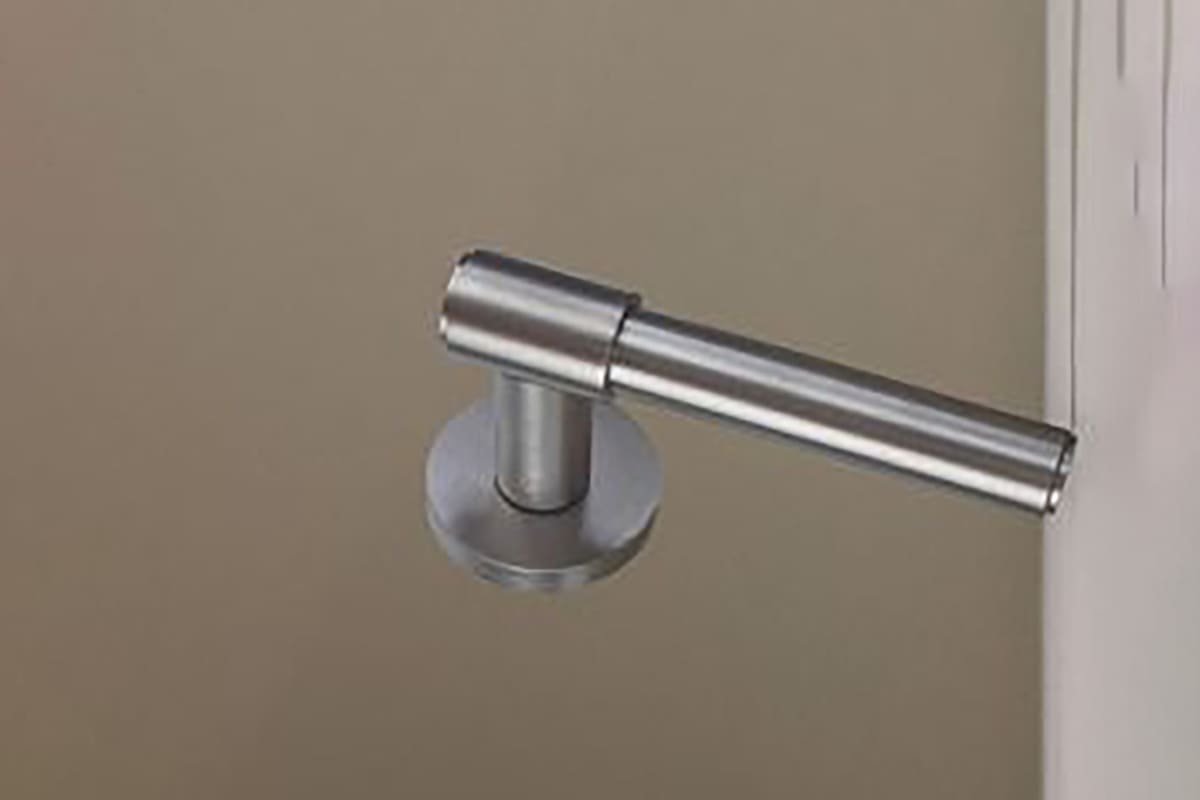
I do not treat door handle selection as a decoration decision only. I look at the door structure first, then I check the handle form, material, finish, certification documents, and compatibility with the complete hardware set.
What Are the Main Types of Door Handles by Form?
Door handle form affects installation, user comfort, lock compatibility, and product positioning. I see many buyers start with a catalog photo, but that can create problems later. If the handle shape does not match the door structure, even a good-looking product can fail in the market.
The main types of door handles by form are lever handles, pull handles, knob handles, narrow backplate or rose handles, and specialty institutional handles.1 I usually match lever handles with swing doors, pull handles with entrance or fire doors, narrow handles with profile doors, and nylon or plastic-steel handles with public-use environments.

I start with the door action
In production and B2B communication, I usually ask one simple question first: How will the door be opened every day? The answer quickly narrows the choice.
A hinged interior door may need a lever handle with a mortise lock. A glass or metal entrance door may need a pull handle. A slim aluminum profile door may need a narrow backplate lever. A hospital ward door may need a warmer, easier-to-clean nylon handle. The form is not only about appearance. It affects function.
Common handle forms and typical uses
| Handle form | Common use | Main advantage | Selection warning |
|---|---|---|---|
| Lever handle on rose | Interior wooden doors, apartment doors, office doors | Clean look and flexible design | Check spindle size and lock case compatibility |
| Lever handle on backplate | Residential, commercial, and project doors | Covers more installation area | Confirm plate width, screw position, and lock spacing |
| Pull handle | Entrance doors, fire doors, commercial doors | Strong grip and simple operation | Confirm fixing method and door thickness |
| Narrow-profile handle | Aluminum profile doors, narrow-frame doors | Fits limited installation width | Measure profile width before ordering |
| Knob handle2 | Some residential markets | Compact and traditional | Less suitable where accessibility is important3 |
| Nylon handle | Hospitals, schools, wards, public buildings | Warmer touch and potential hygiene benefits | Verify antibacterial testing if claimed |
I match the form to the hardware set
I also check the full door hardware set before confirming a handle. A handle does not work alone. It must coordinate with:
- Mortise lock body
- Euro cylinder
- Hinge type
- Door closer or panic hardware
- Escutcheon or rose size
- Backset and center distance
- Door thickness
- Fire-door or project specification
For example, a lever handle can look correct in a sample box, but it may not align with the lock center distance required by the buyer’s market. A pull handle may be strong enough as a part, but it may need the right through-bolt fixing for heavy-use doors. A narrow-profile handle may fit the lock, but it may still clash with the frame rebate if the projection is not checked.
I avoid ranking one form as “best”
I do not say one handle form is always better than another. I prefer to say that each form has a best-use scenario. For wholesalers, this matters because product lines often need different price levels and different use cases. For door factories, it matters because installation speed and after-sales stability are just as important as design.
My practical rule is simple: I choose the form after I understand the door, the lock, the user, and the market standard.
Which Types of Door Handles Work Best for Fire-Rated Doors?
Fire-rated doors create higher selection pressure because the handle is part of a safety-related door assembly.4 I often see buyers focus only on strength or price, but that is not enough. The handle should also match project documents, local standards, and the complete fire-door hardware system.
For fire-rated doors, stainless steel pull handles, especially hollow U-shaped pull handles, are commonly selected because they offer durability, corrosion resistance, and stable performance in demanding applications.5 I always advise buyers to verify the required fire rating, certification scope, installation method, and local approval documents before final procurement.
Why stainless steel is common for fire-door hardware
I often recommend stainless steel for high-traffic or fire-door projects because it gives a strong balance of durability, corrosion resistance, and production consistency. In many commercial projects, stainless steel pull handles are easier to specify because buyers already associate them with public buildings, escape routes, service doors, and heavy-use areas.
However, I do not treat stainless steel as a magic answer. The door assembly still needs correct documentation. A handle that looks suitable may not be acceptable if the certification documents do not cover the required fire rating, door type, installation method, or target market.
Typical fire-door handle selection points
| Evaluation point | What I check | Why it matters |
|---|---|---|
| Material | Stainless steel grade, wall thickness, finish | Affects corrosion resistance and durability |
| Shape | U-shaped pull, lever, or compatible project type | Affects usability and fixing strength |
| Fixing method | Through-bolt, back-to-back, concealed fixing | Affects installation reliability |
| Door thickness | Commonly 35–55 mm or project-specific | Prevents wrong screw length and loose fitting |
| Certification | CE, fire-rated documents, test reports where applicable | Buyers must verify local acceptance |
| Matching hardware | Lock, cylinder, hinges, closer, panic device | Fire doors work as a complete assembly |
Hollow U-shaped pull handles
For many fire-door and commercial-door uses, I see hollow U-shaped stainless steel pull handles selected because they are practical and cost-efficient. The hollow construction can reduce weight and cost compared with solid pulls6, while still giving good usability when the tube thickness and welding quality are controlled.
When I evaluate this type, I look at:
Tube diameter
A common diameter range may include 19 mm, 22 mm, 25 mm, 32 mm, or project-specific dimensions.Wall thickness
The wall thickness affects strength, feel, and durability. I check it carefully for high-use doors.Welding and polishing
Poor welding can create weak points and visible defects. I prefer smooth finishing and consistent radius control.Fixing accessories
Screws, bolts, washers, and mounting bases must match the door thickness and door material.Finish consistency
Satin stainless steel, polished stainless steel, and PVD finishes have different market positions and maintenance expectations.
Fire performance must be verified
I always write fire-related claims carefully. A handle may be used on fire-rated doors, but the buyer still needs to confirm whether the product and the complete door set meet the required standard. Local markets may require different documents, such as CE-related documentation, fire test reports, classification reports, or project approval files.
For importers and hardware brands, I suggest asking suppliers for:
- Current certificates
- Test report copies
- Product drawings
- Material specifications
- Installation instructions
- Batch traceability information
- Confirmation that the tested configuration matches the order
I also recommend professional evaluation for application-specific fire-door projects. A factory can provide product documents and manufacturing data, but the final compliance decision should be made against the target market’s standard and the complete door assembly.
Which Types of Door Handles Suit Interior Wooden Doors?
Interior wooden doors need handles that match both function and interior design. I often see buyers struggle because the same wooden door may be sold into budget housing, mid-range apartments, villas, hotels, or retail channels. Each market expects a different balance of finish, shape, price, and durability.
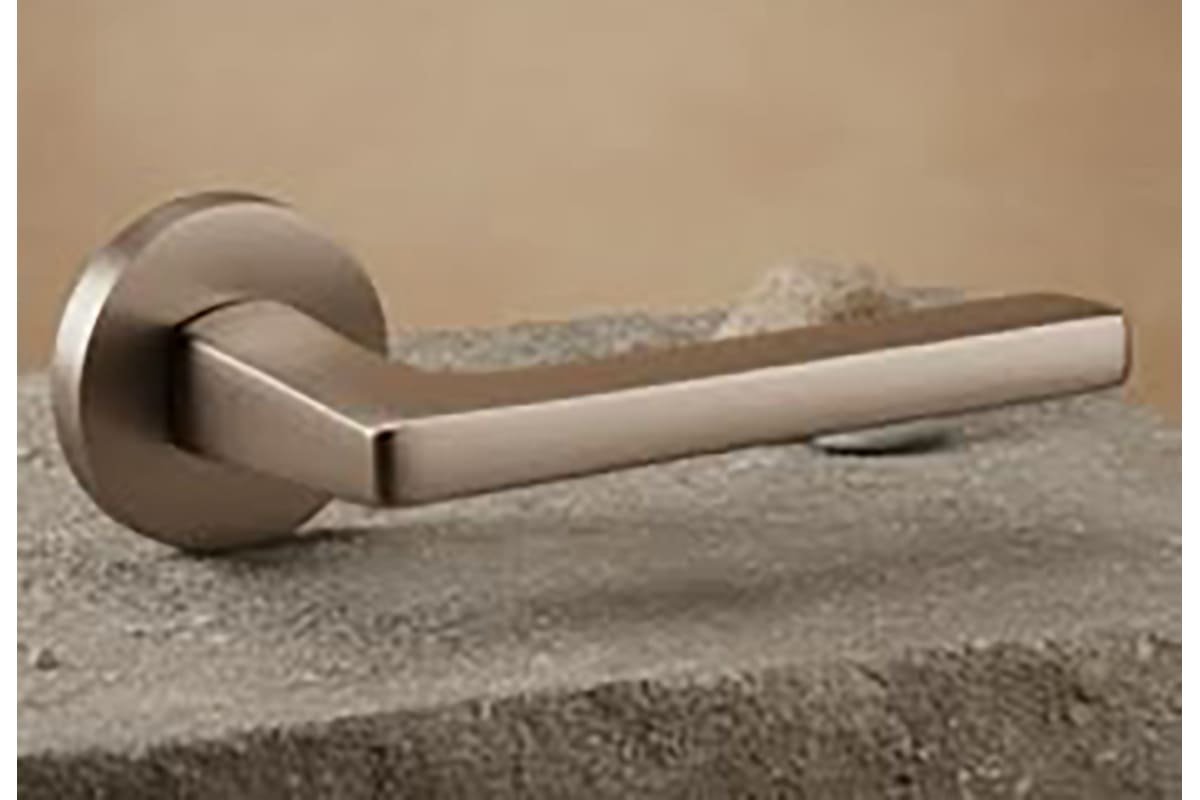
For interior wooden doors, zinc alloy lever handles are often preferred because they allow decorative shapes, rich surface finishes, and easy matching with locks, hinges, and cylinders. For lower-budget wooden doors, aluminum alloy handles can be a more economical option when the project does not require premium weight or complex styling.
Why zinc alloy is popular for decorative wooden doors
I often see zinc alloy handles used for interior wooden doors because the material supports more decorative forming. Zinc alloy can be die-cast into curves, patterns, and heavier shapes7 that many residential and hotel markets prefer. It also accepts many finishes, such as satin nickel, chrome, antique bronze, black, gold, and other decorative coatings.8
This flexibility matters for hardware brands and wholesalers. A door handle is often part of a visible package that includes:
- Lever handle
- Lock body
- Cylinder or key system
- Hinges
- Door stopper
- Escutcheon or privacy turn
- Packaging and brand presentation
When the product line needs several styles for different customer levels, zinc alloy gives useful design freedom.
Aluminum alloy as an economical option
Aluminum alloy handles can work well for lower-budget interior wooden doors.9 I do not position them as “worse” in every case. I position them as a practical choice when the buyer needs a lighter handle, simpler design, and competitive cost.
For example, a bulk wholesaler selling to budget apartment projects may prefer aluminum alloy because it helps control the full door hardware set price. A retail-focused brand may choose zinc alloy for heavier hand feel and richer decoration. Both choices can be correct when they match the market.
Material comparison for interior wooden doors
| Material | Best-fit market | Strengths | Watch points |
|---|---|---|---|
| Zinc alloy | Mid-range and decorative wooden doors | Rich shapes, many finishes, solid feel | Coating quality and casting control matter |
| Aluminum alloy | Budget interior doors and simple projects | Economical, lightweight, easy to supply | Less premium feel in some markets |
| Stainless steel | Modern interiors, offices, damp areas | Durable and corrosion-resistant | Style may be more minimalist |
| Brass | Premium or traditional markets | High-end feel and classic appearance | Higher material cost |
I also check lock compatibility
Interior wooden doors often use mortise locks. I check the lock center distance, spindle size, backset, and screw fixing before confirming the handle. A beautiful handle can become a problem if the rose covers the wrong area or if the spindle length does not match the door thickness.
Common checks include:
Door thickness
Many interior wooden doors are around 35–45 mm10, but project doors can vary.Spindle size
Common square spindle sizes include 8 mm in many markets, but buyers should confirm.Rose or backplate coverage
A rose handle looks clean, but it may not cover old holes in replacement markets.Finish matching
The handle finish should match hinges, cylinder escutcheons, and other visible accessories.Packaging needs
Hardware brands may require logo stamping, laser logos, color boxes, or installation drawings.
In my experience, interior wooden door buyers usually need both product variety and stable finish quality. I therefore advise checking not only the sample appearance, but also batch consistency, salt spray test information where relevant, coating adhesion, and packaging protection for long-distance shipping.
Which Types of Door Handles Fit Profile or Narrow-Frame Doors?
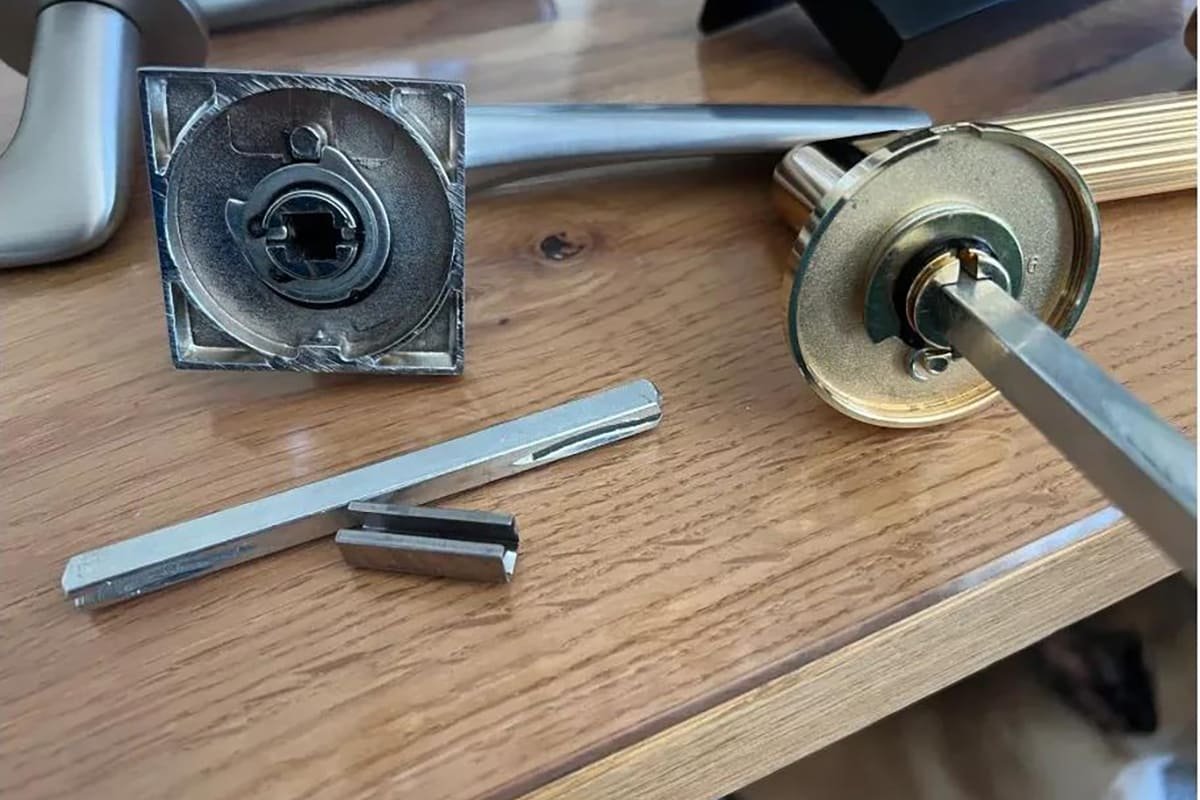
Profile doors and narrow-frame doors create installation limits that many catalog photos do not show. I see this issue often with aluminum doors, slim steel doors, and modern partition systems. A standard backplate can be too wide, and a large rose can interfere with the frame or glass line.
For profile or narrow-frame doors, narrow backplate handles or slim rose handles are usually selected because they fit limited installation widths. Stainless steel, aluminum, or plastic-steel materials can be used depending on the project. I always recommend confirming profile width, lock body size, screw position, and handle projection before ordering.
Why profile doors need special attention
A profile door has less available mounting space than a standard wooden door.11 The handle may need to sit on a slim stile, near a glass panel, or close to a frame edge. This makes the handle width and fixing layout very important.
I usually ask buyers for a drawing before quoting narrow-frame hardware. A photo is helpful, but a drawing is better. The drawing should show the profile width, door thickness, lock cutout, screw hole positions, and clearance around the handle.
Key measurements I check
| Measurement | Why I check it |
|---|---|
| Profile face width | Confirms whether the backplate or rose can fit |
| Door thickness | Confirms spindle and screw length |
| Lock case dimensions | Confirms handle and lock compatibility |
| Backset | Prevents hand clearance problems |
| Screw center distance | Avoids drilling mismatch |
| Handle projection | Prevents frame or wall conflict |
| Glass or panel position | Prevents fixing interference |
Suitable materials for narrow-frame handles
Stainless steel is a strong option when the door is used in commercial, exterior, or higher-traffic conditions. It gives good durability and a clean modern look. Aluminum alloy may fit cost-sensitive profile door projects. Plastic-steel or reinforced polymer materials can be considered where insulation, touch comfort, or specific system compatibility matters.
I avoid saying one material always wins. The right choice depends on the door system and the buyer’s market. A Middle East aluminum door project may value corrosion resistance and strong fixing. A European profile system may require precise dimensions and a specific aesthetic. A Southeast Asian wholesaler may need a balance of cost, finish stability, and fast supply.
Narrow handles must still feel usable
Slim does not mean uncomfortable. I still check the grip shape and clearance. If the lever is too close to the door surface, users may hit their knuckles. If the handle projection is too large, it may interfere with nearby frames or sliding screens.
I also check whether the handle matches the full system:
- Narrow mortise lock
- Euro profile cylinder
- Cylinder escutcheon
- Strike plate
- Hinges
- Door closer where used
- Weather seal or gasket position
For B2B sourcing, I suggest requesting pre-production drawings for profile door handles. At SDH Hardware, we normally treat drawings and installation details as important communication tools after order confirmation. This reduces misunderstanding and helps door manufacturers plan drilling, machining, and assembly more efficiently.
When Should I Specify Nylon Door Handles for Hospitals, Schools, or Public Buildings?
Hospitals, schools, wards, and public buildings need handles that consider comfort, hygiene, safety, and frequent use. I see these projects fail when buyers only choose metal handles by habit. In cold climates or care environments, touch comfort and cleaning expectations can be just as important as appearance.
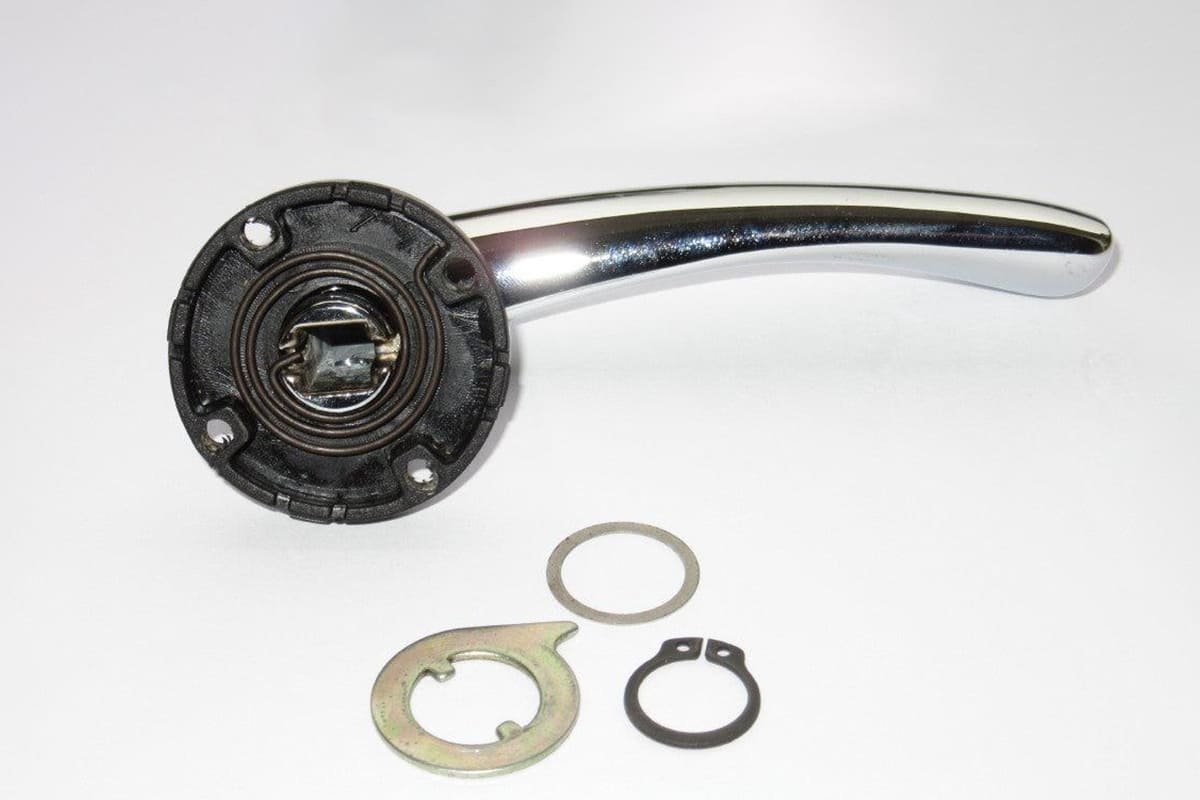
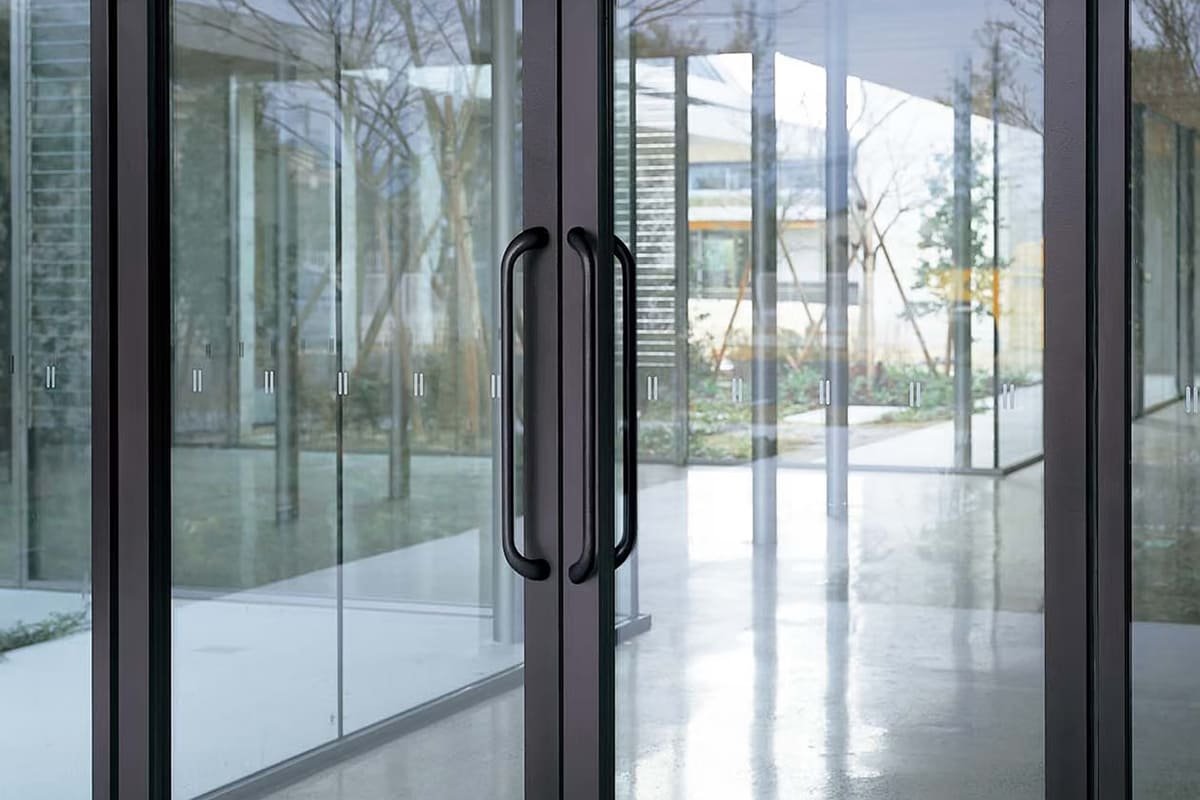
I specify nylon door handles when a project needs warmer touch, user comfort, light weight, and possible antibacterial performance with verified additives or testing. They can suit hospitals, wards, schools, care facilities, and similar public spaces. Any antibacterial claim should be supported by supplier documents, test reports, or certification accepted in the target market.
Why nylon can be useful in public spaces
Nylon handles can feel warmer than metal in winter.12 This matters in hospitals, elderly-care facilities, schools, and residential public areas where many users touch the same hardware daily. I also see nylon considered where designers want a softer hand feel and less “cold metal” contact.
Some nylon handles can be specified with antibacterial additives, such as silver-ion-based additives. I write this carefully because the presence of an additive is not the same as verified antibacterial performance. Buyers should request test reports and confirm whether the test method is accepted in their target market.
Public-space selection criteria
| Requirement | What I consider |
|---|---|
| Touch comfort | Nylon feels warmer than metal in cold environments |
| Hygiene expectations | Antibacterial claims need testing or certification |
| Cleaning | Surface should tolerate common cleaning routines |
| Durability | Material grade and structure must match traffic level |
| Safety | Shape should reduce sharp edges and snagging |
| Color | Color coding may help wards, schools, or public systems |
| Compliance | Project and local standards should be confirmed |
I do not separate hygiene from maintenance
A handle material alone does not create a hygienic building. Cleaning protocols, user behavior, ventilation, and maintenance all matter. I therefore treat antibacterial nylon as one possible specification, not as a complete infection-control solution.
For hospitals and schools, I recommend asking suppliers for:
- Material description
- Additive information if antibacterial performance is claimed
- Relevant test reports
- Cleaning and maintenance guidance
- Color stability information
- Mechanical testing data where available
- Installation instructions
Suitable use cases
Nylon handles may be worth considering for:
Hospital wards
Users may include patients, nurses, visitors, and elderly people. Warm touch and easy grip can improve comfort.Schools and kindergartens
A softer feel and rounded shape may be preferred. Color options can also support interior planning.Care homes
Users may have weaker grip strength. A comfortable lever shape can support daily use.Public service buildings
A durable and easy-to-clean handle can support high-frequency operation.Cold-climate interiors
Nylon can reduce the discomfort of touching cold metal in winter.
I still check the lock compatibility, fixing strength, and door type before recommending nylon. A public building may need fire-door hardware in some locations and comfort-focused handles in others. The same project can require several handle types, and the schedule should clearly define where each handle belongs.
Frequently Asked Questions
What is the most common type of door handle for interior doors?
Lever handles are the most common choice for interior doors because they are easy to operate, widely compatible with mortise locks, and available in many materials and finishes. I usually match zinc alloy lever handles with decorative wooden doors and aluminum alloy handles with more economical interior projects.
Are stainless steel handles always the best option?
Stainless steel handles are strong, durable, and corrosion-resistant, but they are not always the best option. I choose stainless steel for fire doors, commercial doors, and modern high-use areas. I may choose zinc alloy, aluminum alloy, nylon, or brass when design, budget, comfort, or market positioning requires it.
Can I use decorative zinc alloy handles on fire-rated doors?
I would not assume that decorative zinc alloy handles are suitable for fire-rated doors without documentation. Fire-rated door hardware should be checked against the required local standard, tested configuration, and project specification. I recommend requesting certificates, test reports, drawings, and professional compliance review before procurement.
What should I check before ordering door handles in bulk?
I check door material, door thickness, lock body size, spindle size, backset, screw positions, finish requirement, packaging, certification documents, and target market expectations. For profile doors or fire doors, I also request drawings and project requirements before confirming the final handle model.
Which handle material is best for hospitals or schools?
Nylon can be a good option for hospitals, schools, wards, and care facilities because it feels warmer to touch and may support antibacterial specifications when verified. I still recommend checking durability, cleaning compatibility, lock matching, and test documents before using antibacterial or hygiene-related claims in a project.
Conclusion
Types of door handles should be selected by application, not by appearance alone. I first check the door material, frame structure, lock compatibility, user environment, finish expectation, budget level, and any fire or hygiene requirements. Stainless steel often suits fire-rated and high-use doors, zinc alloy fits decorative wooden doors, aluminum alloy supports budget projects, narrow handles fit profile doors, and nylon can help in public spaces. If you need factory-direct support for B2B door handle selection, SDH Hardware can help you compare materials, specifications, finishes, and matching hardware sets for your target market.
"Door handle", https://en.wikipedia.org/wiki/Door_handle. A general architectural-hardware reference classifies door furniture by operating form, including levers, knobs, and pull handles, supporting the article’s use of these as standard handle categories; it may not use the same B2B sourcing categories such as narrow-profile or institutional nylon handles. Evidence role: definition; source type: encyclopedia. Supports: A neutral reference should define common door-handle forms and show that levers, knobs, and pulls are recognized categories of door furniture.. Scope note: The support is contextual because classifications vary by market and product catalog. ↩
"Door handle", https://en.wikipedia.org/wiki/Door_handle. A general door-hardware reference identifies door knobs as a standard form of door operating hardware, which supports their inclusion among common handle forms; the source may not quantify their prevalence in any specific residential market. Evidence role: definition; source type: encyclopedia. Supports: A neutral reference should establish that door knobs are a standard form of door hardware used on doors, especially in residential contexts.. Scope note: The support is definitional rather than market-specific. ↩
"Chapter 3: Operable Parts - Access-Board.gov", https://www.access-board.gov/ada/guides/chapter-3-operable-parts/. Accessibility standards requiring door hardware to be operable with one hand and without tight grasping, pinching, or wrist twisting support the article’s caution about knob handles in accessibility-sensitive locations; this does not mean knobs are prohibited in every non-accessible residential application. Evidence role: expert_consensus; source type: government. Supports: Accessibility guidance should support that operable door hardware should not require tight grasping, pinching, or twisting of the wrist, which makes many round knobs less suitable than lever hardware in accessible environments.. Scope note: The support applies most directly where accessibility standards are legally or contractually required. ↩
"Fire Rated Door Hardware Requirements for Hospitals and Medical ...", https://sdhhardware.com/2026/08/27/fire-rated-door-hardware-requirements-for-hospitals-and-medical-buildings/. Fire-door guidance treats doors, frames, and hardware as components of a rated assembly, supporting the article’s statement that handle selection is safety-related; the guidance does not by itself validate any particular handle model without its tested configuration. Evidence role: expert_consensus; source type: institution. Supports: A fire-safety standard or institutional guide should support that fire doors are evaluated as assemblies and that hardware selection affects compliance and performance.. Scope note: The support is assembly-level and does not certify an individual product. ↩
"Stainless steel", https://en.wikipedia.org/wiki/Stainless_steel. Materials-science references describe stainless steel as corrosion resistant because chromium promotes a passive surface film, supporting its frequent selection for durable door hardware; this evidence addresses material behavior rather than proving superior performance of every stainless-steel handle design. Evidence role: mechanism; source type: education. Supports: A materials-science source should explain that stainless steels contain chromium and form a passive oxide layer that improves corrosion resistance, supporting their use in demanding applications.. Scope note: The support concerns stainless steel as a material, not a specific handle construction or supplier. ↩
"Experimental Analysis of Steel Circular Hollow Section under ...", https://pmc.ncbi.nlm.nih.gov/articles/PMC9230980/. Engineering references on hollow structural sections show that hollow forms can achieve lower mass by using less material than solid members of comparable outer dimensions, supporting the article’s weight-reduction claim; material-cost savings depend on manufacturing method, tolerances, finishing, and order volume. Evidence role: mechanism; source type: education. Supports: An engineering source should support that hollow sections use less material and have lower mass than solid sections of similar external dimensions, which can reduce material-related cost.. Scope note: The support is mechanical and contextual, not a direct cost study of door pull handles. ↩
"Where zinc alloy material is applied? - SDH hardware- China ...", https://sdhhardware.com/2026/06/12/where-zinc-alloy-material-is-applied/. Technical references on zinc die casting describe zinc alloys as suitable for producing complex, detailed components, supporting the article’s explanation of decorative handle shapes; this does not establish the quality of any specific casting or finish. Evidence role: mechanism; source type: institution. Supports: A materials or industry institution should support that zinc alloys are widely used in die casting and can reproduce complex shapes with good dimensional detail.. Scope note: The support concerns manufacturing capability, not finished-product durability. ↩
"Zinc Alloy Lever Handles for Modern Homes: Are They the Right ...", https://sdhhardware.com/2026/08/21/zinc-alloy-lever-handles-for-modern-homes-are-they-the-right-choice/. Surface-finishing literature describes plating and coating processes for zinc die castings, supporting the article’s statement that zinc-alloy handles can receive decorative finishes; coating performance still depends on alloy composition, surface preparation, and process control. Evidence role: mechanism; source type: research. Supports: A surface-finishing source should support that zinc die castings can be plated or coated for decorative finishes when properly prepared.. Scope note: The support is process-level and does not prove finish durability for a particular product batch. ↩
"Aluminium alloy", https://en.wikipedia.org/wiki/Aluminium_alloy. Materials references describe aluminum alloys as lightweight engineering materials with broad use in manufactured products, supporting the article’s positioning of aluminum handles for cost-sensitive interior applications; the source may not provide direct pricing data for door handles. Evidence role: general_support; source type: education. Supports: A neutral materials source should support that aluminum alloys are lightweight and widely used where lower mass and economical production are important considerations.. Scope note: The support is contextual because actual handle cost depends on alloy grade, tooling, finish, labor, and order quantity. ↩
"What Type of Doors Can a Mortise Lock Be Fitted On? - SDH hardware", https://sdhhardware.com/2026/07/15/what-type-of-doors-can-a-mortise-lock-be-fitted-on/. Architectural door references commonly list interior door thicknesses in the range of roughly 35–45 mm, supporting the article’s dimensional check for handle ordering; dimensions vary by country, door construction, and project specification. Evidence role: general_support; source type: institution. Supports: A door-standard or architectural reference should support typical interior door thickness ranges near 35–45 mm in relevant markets.. Scope note: The support is typical-range guidance, not a universal standard. ↩
"SECTION 087111 - DOOR HARDWARE (SCHEDULED BY ...", https://fpm.usc.edu/wp-content/uploads/2021/11/087102-USC-HSC-door-hardware-Guide-Specification_1.pdf. Architectural-hardware guidance for narrow-stile doors notes that reduced stile width constrains lock and handle placement, supporting the article’s warning about limited mounting space; the exact constraint depends on the profile system and hardware design. Evidence role: mechanism; source type: education. Supports: A building-design or architectural-hardware source should support that narrow-stile/profile doors limit lock and handle mounting dimensions compared with wider timber doors.. Scope note: The support is design-contextual and requires project-specific drawings for final specification. ↩
"[PDF] A New Approach to Defining Human Touch Temperature Standards", https://ntrs.nasa.gov/api/citations/20100020960/downloads/20100020960.pdf. Materials-science references show that polymers such as nylon have far lower thermal conductivity than metals, supporting the observation that nylon handles can feel warmer in cold conditions; perceived comfort also depends on ambient temperature, surface texture, and contact duration. Evidence role: mechanism; source type: education. Supports: A materials-science source should support that nylon and other polymers have much lower thermal conductivity than metals, causing less rapid heat transfer from the hand.. Scope note: The support explains the thermal mechanism rather than measuring a specific door-handle product. ↩