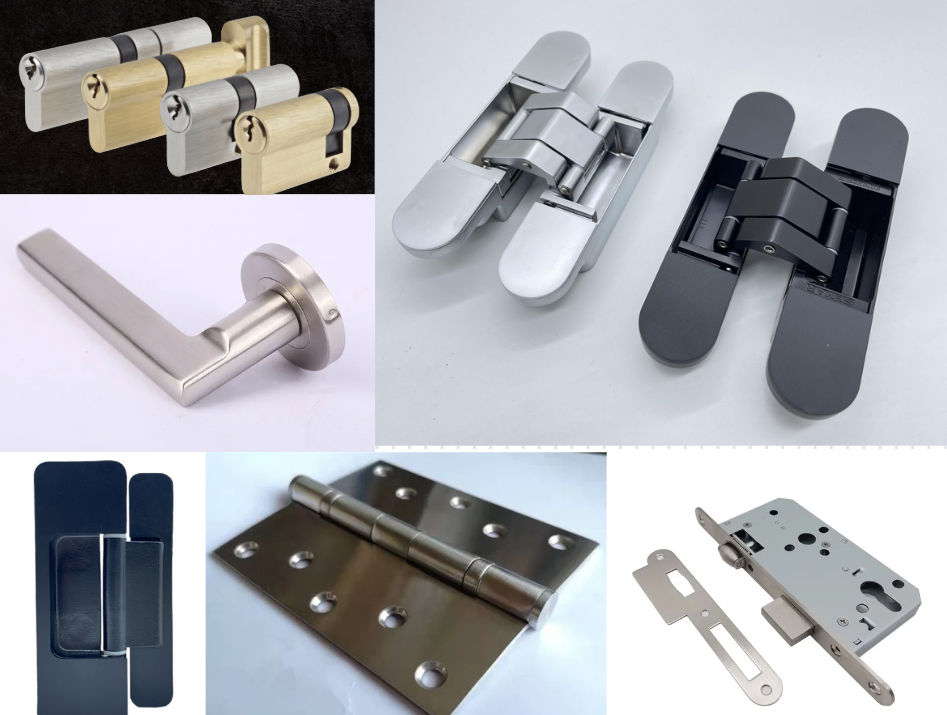
Interior doors play a crucial role in both functionality and aesthetics within any building. From bedrooms to offices, the right door type ensures privacy, noise control, and seamless design integration. However, choosing the door itself is only part of the solution — selecting the appropriate door hardware is equally important for performance, durability, and user experience.
In this guide, we will explore the common types of interior doors and the essential door hardware that complements them, including hinges, locks, and handles, helping you make the right choice for your projects.
Types of Interior Doors
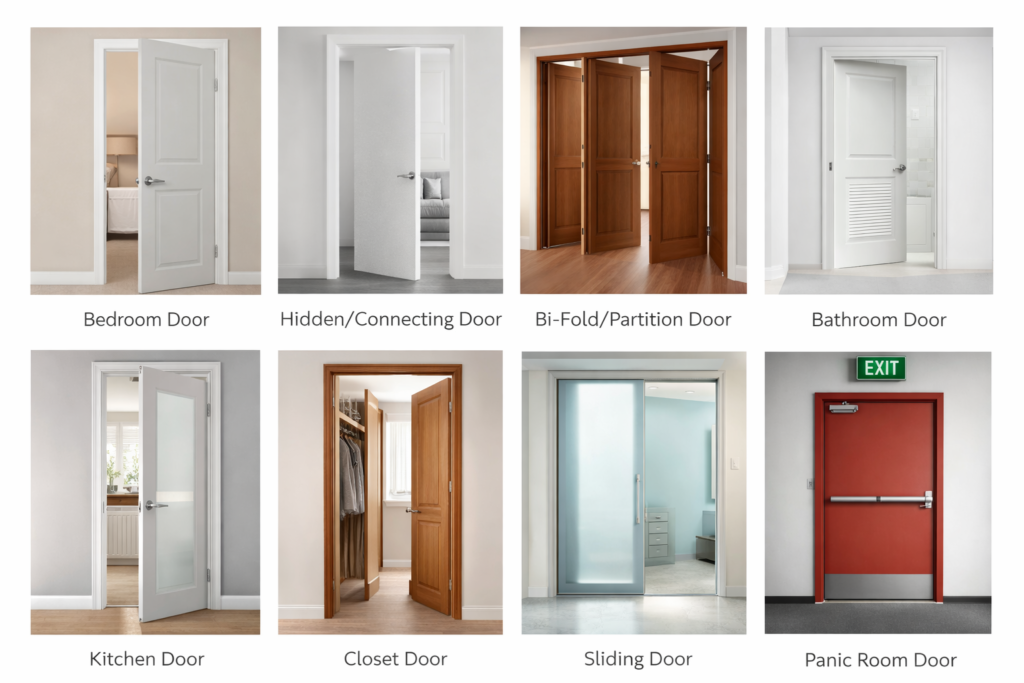
Interior doors vary by function and design.
- Bedroom doors provide privacy and noise reduction.
- Hidden or connecting doors create seamless transitions between spaces.
- Bi-fold or partition doors save space and allow flexible room division.
- Bathroom doors focus on privacy and moisture resistance.
- Closet doors are designed for easy access to storage.
- Sliding doors are ideal for compact areas.
- Kitchen doors help separate cooking spaces, while escape or emergency doors ensure safety in critical situations.
Choosing the right interior door enhances both functionality and design. Matching door types with suitable hardware ensures durability, safety, and a better user experience.
Structure of Doors
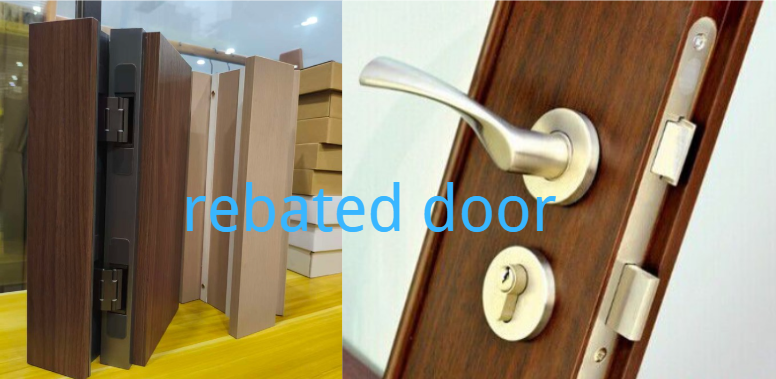
A rebated door has a stepped edge (rebate) that overlaps with the door frame or another door leaf. This design improves sealing, stability, and sound insulation, making it ideal for higher-end interior or double door applications.
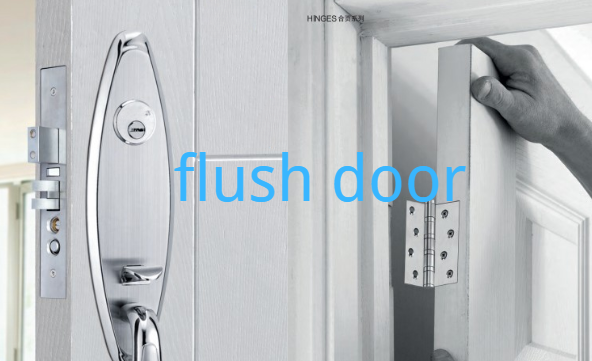
A flush door features a completely smooth, flat surface without any panels or moldings. It offers a clean, modern appearance and is widely used in residential and commercial interior spaces due to its simplicity and cost efficiency.
Interior Door Hardware Solution
1. Configuration for Residential Interior Doors’ Hardware
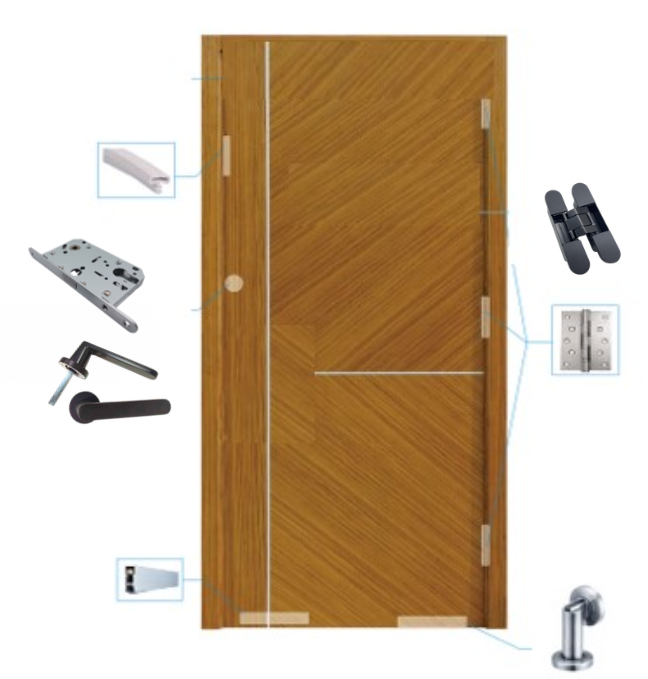
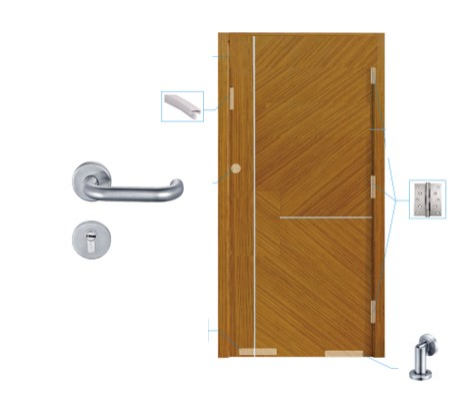
When selecting hardware for residential interior doors, it is important to choose suitable components based on functionality, durability, and design preferences.
• Door Locks
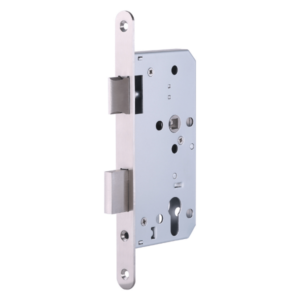
Room door locks should be selected according to different standards and functional requirements.
• Hinges
The quantity and size of hinges should be determined based on the door leaf thickness and height to ensure stability and long-term performance.
• Door Stopper
Door stops should be chosen according to on-site installation conditions to effectively protect walls and doors.
• Sealing Strips (Anti-collision & Dust-proof Strips)
These accessories help reduce noise, prevent impact damage, and minimize dust infiltration, improving overall comfort.
• Door Handles
Door handles can be selected in different materials, finishes, and designs to match aesthetic preferences and interior styles.
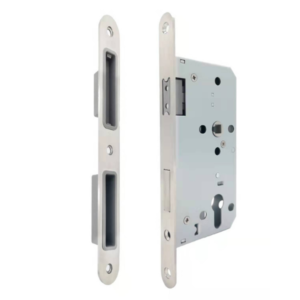

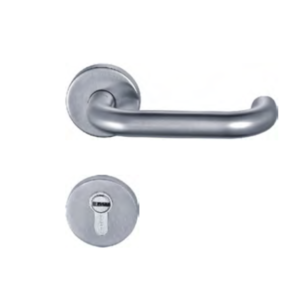
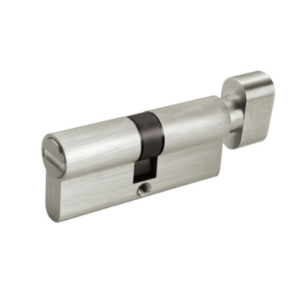

Notes
- Bathroom Door Locks vs. Room Door Locks
The main difference lies in the lock cylinder. Bathroom locks are typically designed for privacy rather than security. - Room Doors
Standard room doors should be supplied with at least three keys for daily use. - Bathroom Doors
Bathroom locks usually do not require keys and can be emergency unlocked from the outside using a coin or flat tool, ensuring safety in urgent situations.
2. Configuration for Invisible Doors’ Hardware
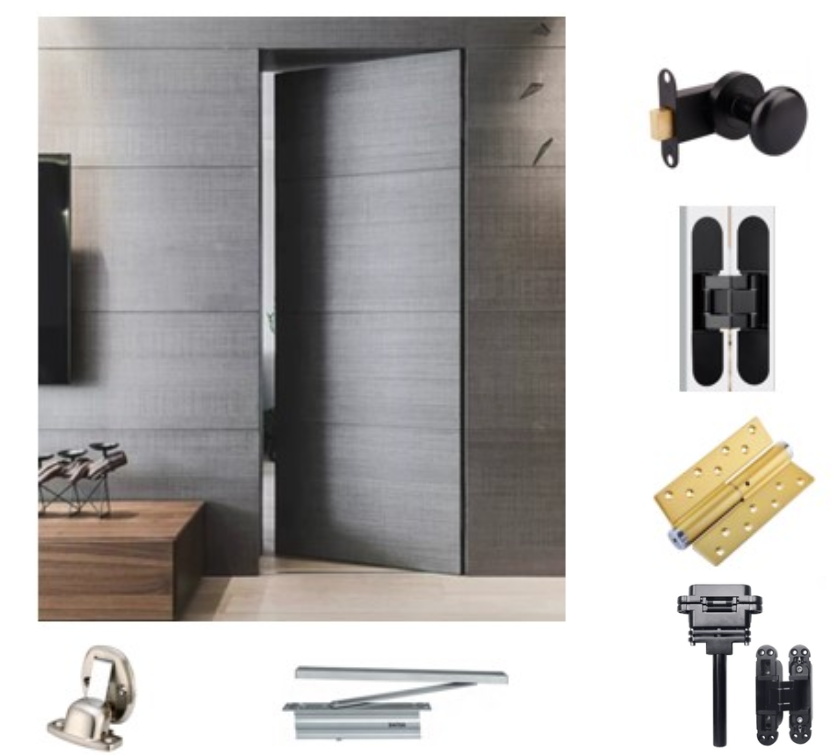
Invisible doors can visually extend the width of a feature wall, helping create a clean and seamless interior style that aligns perfectly with modern design concepts.
For residential interior applications, invisible doors are typically equipped with the following hardware:
- Concealed door locks — selected according to different standards and functional requirements
- Concealed Hinges for Invisible Doors — including soft-closing spring hinges, 3D adjustable concealed hinges, or hydraulic self-closing concealed hinges, with quantity and size depending on door thickness and height
Optional accessories:
- Door stopper
- Concealed door closer
This configuration ensures both functionality and a minimalist, integrated aesthetic.


3. Configuration for Refuge Room Door
For residential interior doors, it is recommended to equip the following fire safety hardware:
- Door Lock – Fire-rated lock meeting certified standards (e.g., CE certification). SDH’s locks are CE certified.
- Butt Hinges – Fire-rated butt hinges for enhanced durability and performance in fire conditions.
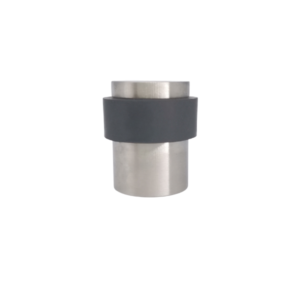
- SS Door Stopper – Selected according to on-site installation requirements.
- Intumescent Seal(Seal strip)– Provides protection against high temperatures and helps prevent smoke penetration.
Note: All fire-rated products should be accompanied by official fire test reports.

Door Hardware Product Introduction
1. EURO Standard for Door Hardware
- Locks: EN12209:2003
- Lever Handle: EN1906:2002
- Cylinder: EN1303-:2015
- Hinge: EN1935:2002
- Panic exit devices: EN1125:2008
- Door Closer: EN1154:1997
2. Materials of Mortice Locks
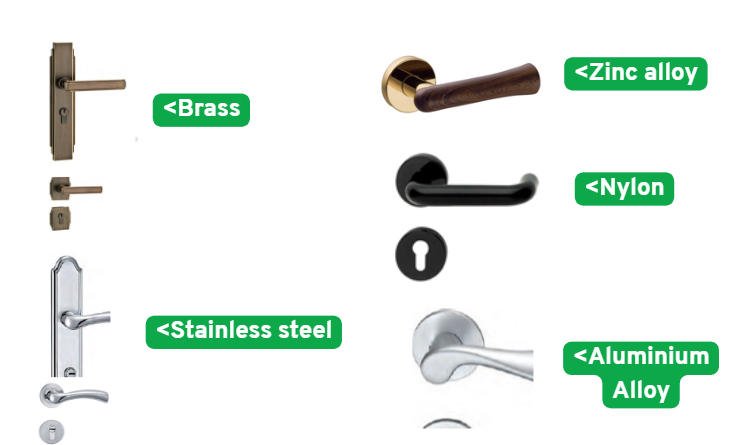
For door mortice locks, the most commonly used materials are stainless steel, zinc alloy, and brass.
- Stainless steel (especially SUS 304) is the best choice for durability and corrosion resistance
- Zinc alloy is cost-effective and suitable for indoor use
- Brass is ideal for premium and luxury applications
3. Finishes of Mortice Locks
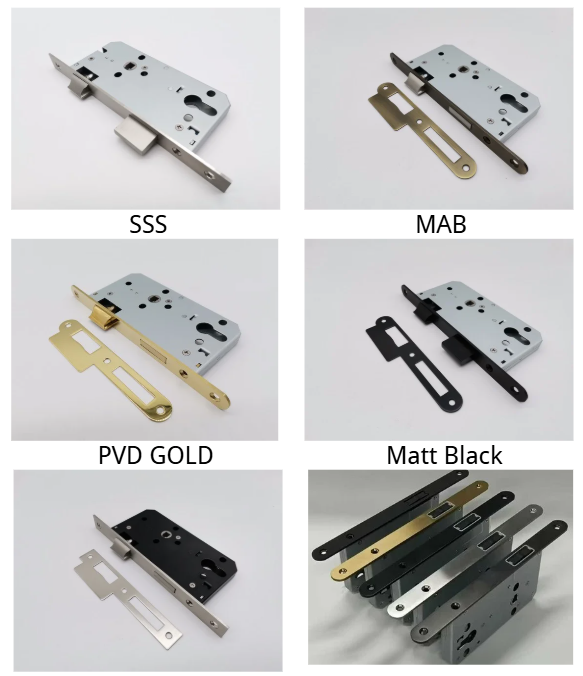
Common finishes of mortice locks include SSS (Satin Stainless Steel), Matt Black, Gun Black, Satin Gold, PVD Gold, etc.
Electroplating is optional for the forend, striking plate, the latch bolt and deadbolt.
Custom finishes are also available — feel free to contact SDH for tailored color options to meet your project requirements.
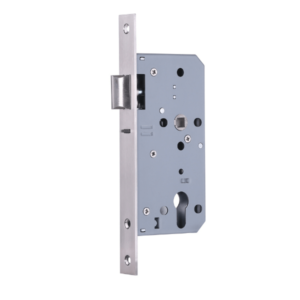
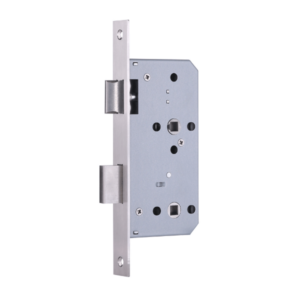
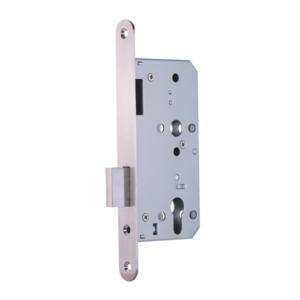
4. Types of Mortice Locks
- Sash Locks – Interior/exterior / fire-rated use. Handle or cylinder operation.
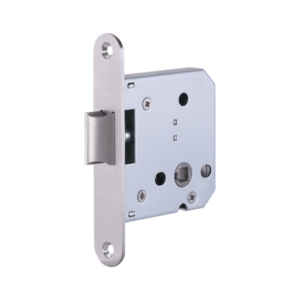
- Passage locks – for doors without locking requirements; Latch is released by pressing the handle
- Deadbolt locks – lock for storerooms; Key / Key function, deadbolt only.
- Bathroom lock – Handle-operated latch, thumb turn with emergency release indicator.
- Night latch lock – Auto-locking; inside handle operation, outside key operation.
- Anti-panic lock – for escape doors; Single-action escape via internal lever; latch and deadbolt retracted simultaneously.
- Classroom lock – When locked from outside by key, the latch can still be retracted from inside. Inside lever allows immediate exit.
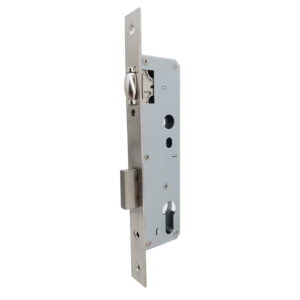
- Roller lock – For single or double-swing doors in high-traffic public areas. Push-to-open when unlocked, providing wind, heat and sound insulation.
- Hook lock – Designed for sliding doors. Hook bolt engages the frame by inside lever or outside key operation, preventing the door from opening or sliding.
- Magnetic lock – with magnetic latch; silent operation
- Narrow lock – for doors with narrow frame, like aluminium doors
- X-ray lock – For hospital X-ray rooms; dual half handles and half cylinders enable independent operation from each side.



5. Euro Lock Cylinders for Mortice Locks
Cylinder with key and knob: for interior doors and fire-rated doors.
Double side key cylinder:for entrance doors, classroom doors and office buildings.
Bathroom cylinder: for bathroom doors at home and hotel.
Half cylinder: for storage room doors and maintenance doors.
Double side key cylinder:for entrance doors
High security cylinder: for entrance doors, bank doors.


6. 3D Adjustable Concealed Hinges(Hidden Hinge)
Concealed hinges offer a clean, modern solution for doors where aesthetics and performance are equally important. Completely concealed when the door is closed, they create a seamless appearance that is ideal for high-end residential interiors, luxury apartments, hotels, and minimalist design projects. In addition to their visual appeal, hidden hinges provide smooth and silent operation, eliminating the need for lubrication while ensuring long-term stability. Their multi-directional adjustability allows precise alignment during installation. All SDH concealed hinges are rigorously tested in-house, achieving over 200,000 opening and closing cycles to guarantee durability. Selected models have also passed Intertek fire resistance testing, withstanding up to 68 minutes, making them suitable for fire-rated door applications.
The SDH 3D adjustable concealed hinge range is designed to meet a wide variety of door requirements:
- Regular models from 15 kg up to 100 kg load capacity: CH40, CH60, CH80, CH100
- Models for central milling up to 47mm door thickness: CT50, CT60
- Models for asymmetrical type: CT40,CW40
- Models for square type: CH40S, CH80S, CH100S
- Models with stainless steel: SH80, SH120
- Models for narrow frame doors: SH70A, SH70B
- Models for entrance doors: CH150, CH200
- Models for self-closing function: CH60D, SC80D
- Models for special applications:SM60
Contact SDH to get more hinges information.
In addition, SDH provides tailored solutions for unique or project-specific requirements, ensuring both functional reliability and design consistency across residential and commercial installations.


7. Butt Hinge
Butt hinge:
With 2(or 4 ball-bearing), widely used for interior doors and fire-rated doors. Manufactured in accordance with BS EN 1935 standards, ensuring reliable performance and durability. Common size: 4″x3″x3mm; 4″x4″x3mm;4″x3.5″x3mm
Security hinge:
Designed for exterior doors, entrance doors, and outward-opening doors. Provides an enhanced level of security with reinforced construction.
Flush hinge:
Suitable for interior doors, including wooden and aluminum doors. Easy to install without the need for mortising or cutting slots.
Flag hinge:
Commonly used for interior doors. The door leaf and frame parts can be installed separately, allowing for quick and convenient on-site assembly.
Lift off hinge:
Mainly used for public bathroom doors. Allows the door to be easily lifted off and can help keep the door in an open or closed position as needed.
Heavy-duty hinge:
Ideal for wooden and steel doors. Offers a high load capacity of up to 160 kg per pair, with maintenance-free operation and no internal oil required.


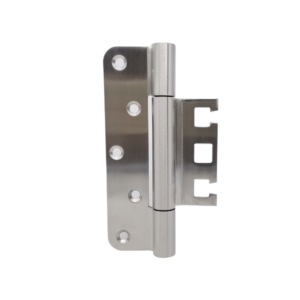
Stainless steel hinges, especially those made from SUS304, are widely used due to their excellent strength, corrosion resistance, and long service life. In comparison, SUS201 is relatively more brittle, offers lower load-bearing capacity, and is more prone to rust, particularly in humid or harsh environments.
With a wide range of materials available on the market, it can be difficult to identify genuine stainless steel hinges. To verify the material, you can:
- Use a spectrometer for accurate material analysis;
- Check the surface finish—SUS201 typically shows more visible pits or roughness, while SUS304 generally has a smoother and more refined surface.
The most reliable approach is to work with a trusted supplier offering products at a reasonable market price, helping you avoid quality risks and costly mistakes.
8. Invisible Door Hinge(Soft-closing 3D Adjustable Concealed Hinge)
SDH offers concealed hinges with load capacities of 60 kg, 80 kg, and 100 kg, specifically designed for invisible doors. These hinges feature adjustable closing speed for smooth and controlled operation, making them ideal for both residential and office applications.
9. Door Accessories
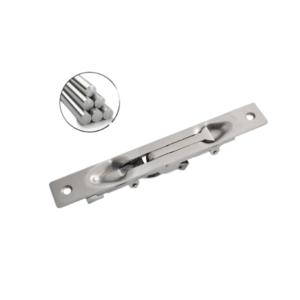
SDH provides door accessories for your doors.


Upgrade your doors with SDH door hardware solutions—engineered for performance, durability, and seamless design. Contact us today to get expert recommendations and customized solutions for your projects.